
Golden goddess: start winning more right now!
Home → Blackjack
Blackjack at Golden Goddess - Play For: Variants, Rules and Payouts
Surrender vs Playing Out on 16 vs 10
Surrender is a rule modifier that allows the player to forfeit half their stake after the dealer checks for blackjack, effectively reducing the house edge by approximately 0.08 percentage points compared to standard play where the full amount is at risk until resolution.
The specific mechanic involves returning exactly 50% of the original wager when the player decides to exit the hand early, which serves as a critical defensive tool against strong dealer up-cards like tens or face cards in multi-deck games.
This option significantly improves the theoretical return to player rate, making it a preferred strategy for beginners who want to minimize losses during unfavorable situations without committing to risky hits on stiff hands.
Early surrender is much more valuable than late surrender, potentially lowering the house advantage by up to 0.6 percentage points, although this variant is extremely rare in modern online casino environments.
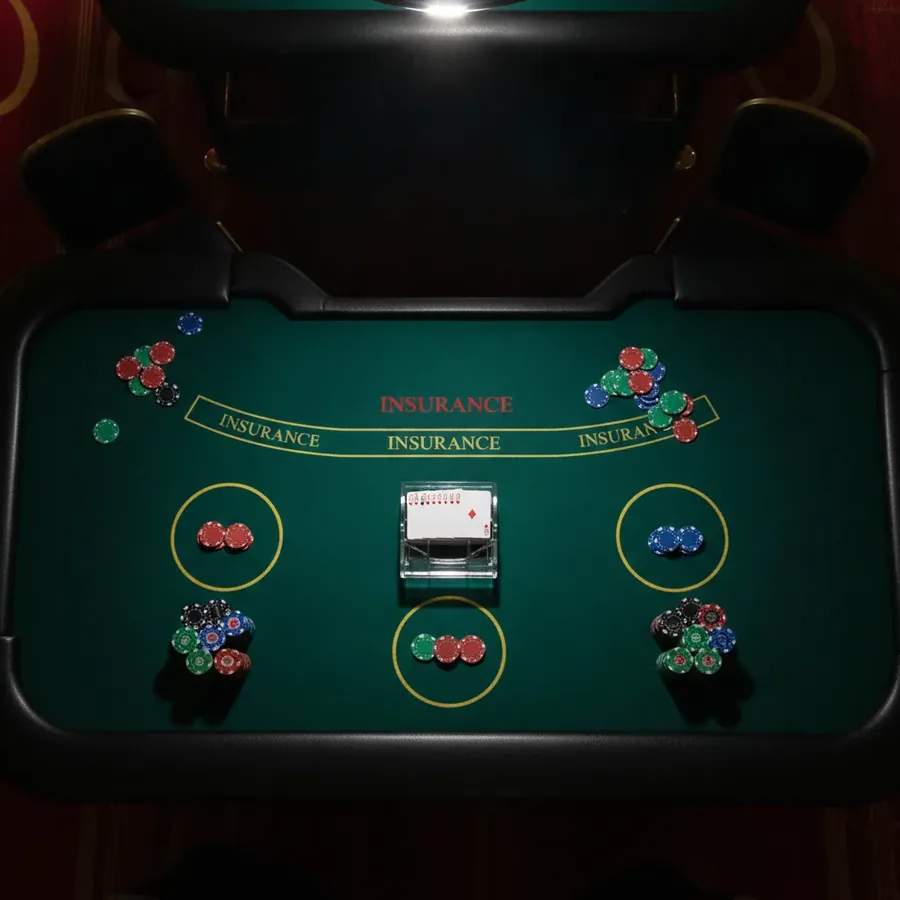
Latency under 2 seconds at the live table
Lightning Blackjack offered by Evolution features lightning multipliers that can reach up to 25x on winning hands, requiring precise timing and low latency to ensure bets are placed before the card dealing sequence begins.
Quantum Blackjack Plus Live from Playtech utilizes quantum multipliers up to 1,000x on three-card combinations totaling 21 points, demanding stable connections to handle the high-frequency data updates associated with these massive payout potentials.
The betting limits for Lightning Blackjack range from 1 EUR to 2,500 EUR, allowing players to adjust their exposure based on the speed of the game and their confidence in the multiplier outcomes.
Evolution also provides Blackjack Party with a party atmosphere moderated by two hosts, maintaining strict operational standards to ensure the game flow remains uninterrupted despite the interactive elements and social features involved.
Which hands are excluded from Surrender?
Blackjack Auszahlung 6:5 variants exclude the surrender option entirely, forcing players to hit or stand on all hands regardless of the dealer's up-card, which increases the house edge to 1.85% compared to the standard 0.46%.
In the 6 Decks S17 DAS DOA version, no surrender is permitted, meaning players must rely solely on basic strategy for doubling after split and standing on soft 17 to maintain the optimal 99.54% RTP.
Insurance bets are never part of the surrender calculation, as they are separate side wagers paying 2:1 when the dealer has an ace, carrying a much higher house edge of 7.47% if taken incorrectly.
Standard rules often prohibit surrendering immediately after a split or if the hand results in a natural blackjack, ensuring that the base game mechanics remain distinct from the optional forfeiture clause available in other tables.
What Hole Card Means at a Live Table
Hole card rules do not apply to European style blackjack games where the dealer does not take a second card until after players complete their actions, fundamentally changing the strategic approach to doubling down.
In American style games, the dealer receives a hole card after the initial deal, but many live tables now use electronic sensors or continuous shuffling machines to eliminate the traditional peek for blackjack during gameplay.
The concept is irrelevant for Quantum Blackjack Plus Live because the outcome is determined by quantum multipliers applied to the final hand totals rather than traditional hole card reveals affecting immediate player decisions.
Players should note that insurance bets only make sense if the dealer shows an ace, but without knowing the hole card value, the statistical disadvantage of 7.47% makes rejection the mathematically correct choice.
Bet two percent of bankroll per hand
Managing your bankroll requires staking no more than two percent of your total funds on any single blackjack hand, especially when playing variations like Liberal Vegas Strip with its favorable 0.28% house edge.
For example, with a 2,000 EUR welcome bonus limit, a two percent bet size equals 40 EUR per hand, allowing for sufficient variance management across the required wagering turnover of the bonus terms.
Table stakes at Evolution's Lightning Blackjack start at 1 EUR and go up to 2,500 EUR, so players must scale their bets proportionally to ensure they stay within the recommended two percent risk threshold.
Slots contribute 100% to wagering requirements while table games only count 10%, making the lower variance of blackjack essential for preserving capital while meeting the 300% bonus conditions over hundreds of hours of play.
Blackjack variants at a glance
| Variant | Payout | House edge | Rule | Bet range |
|---|---|---|---|---|
| Blackjack Insurance / Versicherung (6–8 Decks) | 92.53% | 7.47% | Separate Nebenwette bis 50% der Hauptwette, wenn der Dealer ein Ass hat. Basisstrategie schreibt IMMER Ablehnung vor (außer Karten zählen bei True Count ≥ +3). Bei einem Deck Vorteil ≈ 5.88% | Insurance 2:1 |
| Blackjack Surrender (Late Surrender) – Regel-Effekt | n.a. (Regel-Modifikator) | −0.08 Prozentpunkte | Spieler gibt Hand nach Dealer-Blackjack-Prüfung auf, verliert die Hälfte des Einsatzes. Verbessert RTP um ca. 0.08 Prozentpunkte. Early Surrender ist wesentlich wertvoller (bis −0.6 Prozentpunkte), aber extrem selten. | Rückzahlung 50% des Einsatzes |
| Blackjack Ein Deck, klassische Regeln, 3:2 | 99.85% | 0.15% | Weniger Decks = niedrigerer Vorteil; ein Deck gibt ca. −0.48 Prozentpunkte gegenüber 8 Decks. Oft durch 6:5 Auszahlung kompensiert. | Blackjack 3:2, Gewinn 1:1 |
| Blackjack 6 Decks, S17, DAS, DOA, Auszahlung 3:2, Basisstrategie | 99.54% | 0.46% | Dealer steht auf Soft 17; Verdopplung auf jeder Zweierkarte; Verdopplung nach Split erlaubt; keine Aufgabe. Basisstrategie ist für diesen Wert zwingend | Blackjack 3:2, normaler Gewinn 1:1, Insurance 2:1 |
| Blackjack Auszahlung 6:5 statt 3:2 (6 Decks) | 98.15% | 1.85% | Ersatz von 3:2 durch 6:5 fügt exakt +1.39 Prozentpunkte zum Vorteil des Casinos hinzu – stärker als jede andere Regeländerung. Bei $10 Einsatz zahlt Blackjack $12 statt $15. | Blackjack 6:5, Gewinn 1:1 |
| Blackjack Liberal Vegas Strip (liberale Regeln, 3:2) | 99.72% | 0.28% | Günstigste Regelkombination: S17 + DAS + Resplit + Late Surrender. Standardabweichung 1,15 | Blackjack 3:2, Gewinn 1:1 |
16 vs 10 played incorrectly: most common error
The standard deviation of the Liberal Vegas Strip variant is recorded at 1.15, which indicates a higher volatility compared to single-deck games that have lower variance profiles for beginners navigating complex decision trees.
This statistical measure reflects the risk involved when players hold a hard sixteen against a dealer ten, where the mathematical expectation favors surrendering or hitting rather than standing on a weak total that loses frequently.
The resulting financial impact on the bankroll is significant because incorrect plays in this scenario accelerate the erosion of funds, especially when combined with the house edge of 0.28 percent inherent to the liberal ruleset.
Players should note that Early Surrender, though rare, offers a value improvement of up to minus 0.6 percentage points, making it a far superior option if available in their specific game environment.
RNG draws cards from virtual eight-deck shoe
The RNG version utilizes a virtual eight-deck shoe, which establishes a baseline house edge of 0.46 percent when players adhere strictly to the mandatory basic strategy for six-deck games with S17 and DAS rules.
This configuration contrasts sharply with the single-deck variant, where having fewer decks reduces the casino advantage by approximately minus 0.48 percentage points, offering a more favorable RTP of 99.85 percent for skilled participants.
The payout structure remains consistent at 3:2 for blackjacks, ensuring that a winning hand pays out proportionally to the bet size without the severe penalty associated with 6:5 payout tables found in other venues.
Deviating from the optimal strategy in an eight-deck game increases the house edge significantly, as the larger number of cards dilutes the impact of card counting and reduces the effectiveness of advanced tactical adjustments.
Step-by-step Split at the Live Table
Evolution provides the Lightning Blackjack live table, allowing unlimited players to engage with multipliers up to 25x on winning hands while maintaining a competitive RTP of 99.56 percent for those employing correct tactics.
The betting range extends from 1 EUR to 2,500 EUR, accommodating both casual beginners and high rollers who wish to test splitting strategies under live dealer conditions with real-time visual feedback.
Splitting tens is generally discouraged because it breaks a strong twenty into two weaker hands, costing expected value despite the excitement of potential multipliers, whereas splitting eights is often recommended to mitigate losses.
Playtech offers Quantum Blackjack Plus with even higher stakes up to 5,000 EUR and quantum multipliers reaching 1,000x on three-card combinations, providing a distinct alternative for players seeking higher variance outcomes in live settings.
Error insurance: 7 percent additional house edge
The insurance side bet carries a massive house edge of 7.47 percent, corresponding to an RTP of only 92.53 percent, which makes it one of the worst wagers available in any blackjack variant.
This negative expectation holds true regardless of the deck count, although the edge drops slightly to approximately 5.88 percent in single-deck games, it remains fundamentally unfavorable for the player over the long term.
Basic strategy explicitly dictates always declining insurance unless the player is counting cards and the true count reaches plus three or higher, a condition rarely met by beginners relying on random number generation or live streams.
The payout for insurance is 2:1, which might seem attractive when the dealer shows an ace, but the probability of the dealer having a ten-value card does not justify the substantial loss of expected value.
Splitting tens costs expected value: better stand
Splitting tens results in a loss of expected value because two separate hands starting with ten are statistically weaker than a single hard twenty, which wins against most dealer upcards except an ace or ten.
The rule permitting resplitting aces improves the RTP by 0.08 percentage points, demonstrating how minor rule variations can influence the overall profitability, yet this benefit does not extend to the frequent splitting of face cards.
Double after split is allowed in many variants, improving the RTP by 0.14 percentage points, which encourages players to double down on strong hands created from splits, but this does not offset the initial error of splitting tens.
Hitting on soft seventeen adds 0.22 percentage points to the house edge, highlighting that every deviation from basic strategy, including splitting tens, accumulates to create a significant disadvantage for the player over thousands of hands.
Highroller from 500 EUR per hand
The Quantum Blackjack Plus Live table allows stakes ranging from 1 to 5,000 EUR per hand. This upper limit supports high-stakes players who wish to place large wagers on a single round of action. High rollers can thus manage their bankroll with larger individual bets compared to standard tables.
Lightning Blackjack by Evolution offers a slightly lower maximum stake of 2,500 EUR per hand. While this cap is half that of the Playtech variant, it still accommodates serious gamblers seeking significant exposure. Players choosing this table must adjust their betting strategy to fit the 2,500 EUR ceiling.
Blackjack Party provides a more modest entry point with limits between 1.00 and 1,000 EUR. This range suits players who prefer controlled risk levels or are testing new strategies without excessive financial pressure. The lower maximum ensures that even moderate bettors can participate fully in the game.
Insurance Pays 2:1 Yet Still Costs Money
The insurance side bet pays out at odds of 2:1 when the dealer reveals an Ace as their upcard. This wager covers up to 50% of the original main bet, offering a potential hedge against a dealer blackjack. However, accepting insurance reduces the overall return due to unfavorable odds for the player.
The house edge for insurance stands at 7.47%, which significantly drags down the total RTP to 92.53%. This negative expectation makes insurance a poor choice for basic strategy players who aim to minimize losses over time. Rejecting the bet is always recommended unless counting cards yields a true count of +3 or higher.
For a single-deck game, the advantage shifts slightly to approximately 5.88% for the casino on insurance bets. Even with fewer decks, the mathematical disadvantage remains substantial enough to discourage regular use. Consistent acceptance of insurance erodes long-term profitability regardless of short-term wins.
Blackjack Party runs with two hosts
Evolution’s Blackjack Party features a lively atmosphere driven by two active moderators throughout the session. These hosts engage players directly, creating a social environment distinct from solitary digital gameplay. The dual-host format adds entertainment value beyond the core mechanics of the card game.
Stakes at this live table range from 1.00 to 1,000 EUR, allowing flexible participation for various budget types. The presence of multiple dealers facilitates faster dealing cycles and maintains a continuous flow of action. This setup appeals to those who enjoy interactive elements alongside traditional blackjack rules.
Compared to Quantum Blackjack Plus, which focuses on multipliers rather than social interaction, Blackjack Party emphasizes host-driven engagement. The absence of quantum random multipliers means payouts rely solely on standard winning hands. Players seeking pure entertainment may find the two-host dynamic more appealing than technical bonus features.
Shoe, Cut Card, and 75 Percent Penetration
Most six-deck variants utilize a shoe containing 312 cards, providing a robust reservoir for continuous play. The cut card determines when the current shuffle occurs, ensuring fair distribution across all dealt rounds. This mechanism prevents predictable patterns that could be exploited by skilled observers or counters.
Penetration rates typically reach 75 percent of the deck before reshuffling begins, balancing efficiency with security. Deeper penetration increases variance but also offers more opportunities for strategic decisions like splitting or doubling. Casinos maintain this threshold to preserve game integrity while maximizing playing time per shoe.
Single-deck games often feature different penetration metrics due to their smaller card pool size. With only 52 cards, even minor deviations in dealing affect the remaining composition more drastically. Operators adjust procedures accordingly to ensure randomness remains uncompromised despite the limited volume.
Six Decks to Eight Decks in the Shoe
Standard variations frequently employ six decks, striking a balance between operational efficiency and player advantage. Using six decks instead of eight improves the RTP by approximately 0.02 percentage points through reduced card removal effects. This configuration remains popular among operators for its manageable shuffle frequency and consistent pacing.
Eight-deck shoes increase the house edge slightly compared to six-deck setups due to greater card retention complexity. The additional four decks introduce marginal disadvantages that accumulate over thousands of hands played. Players preferring tighter margins should prioritize tables offering fewer decks whenever possible.
Liberal Vegas Strip rules combined with six decks yield an impressive RTP of 99.72% with a mere 0.28% house edge. Such favorable conditions arise from liberal rule allowances like late surrender and resplitting aces. Tables adhering to these standards represent optimal choices for mathematically inclined participants seeking minimal loss rates.
Golden goddess 2025